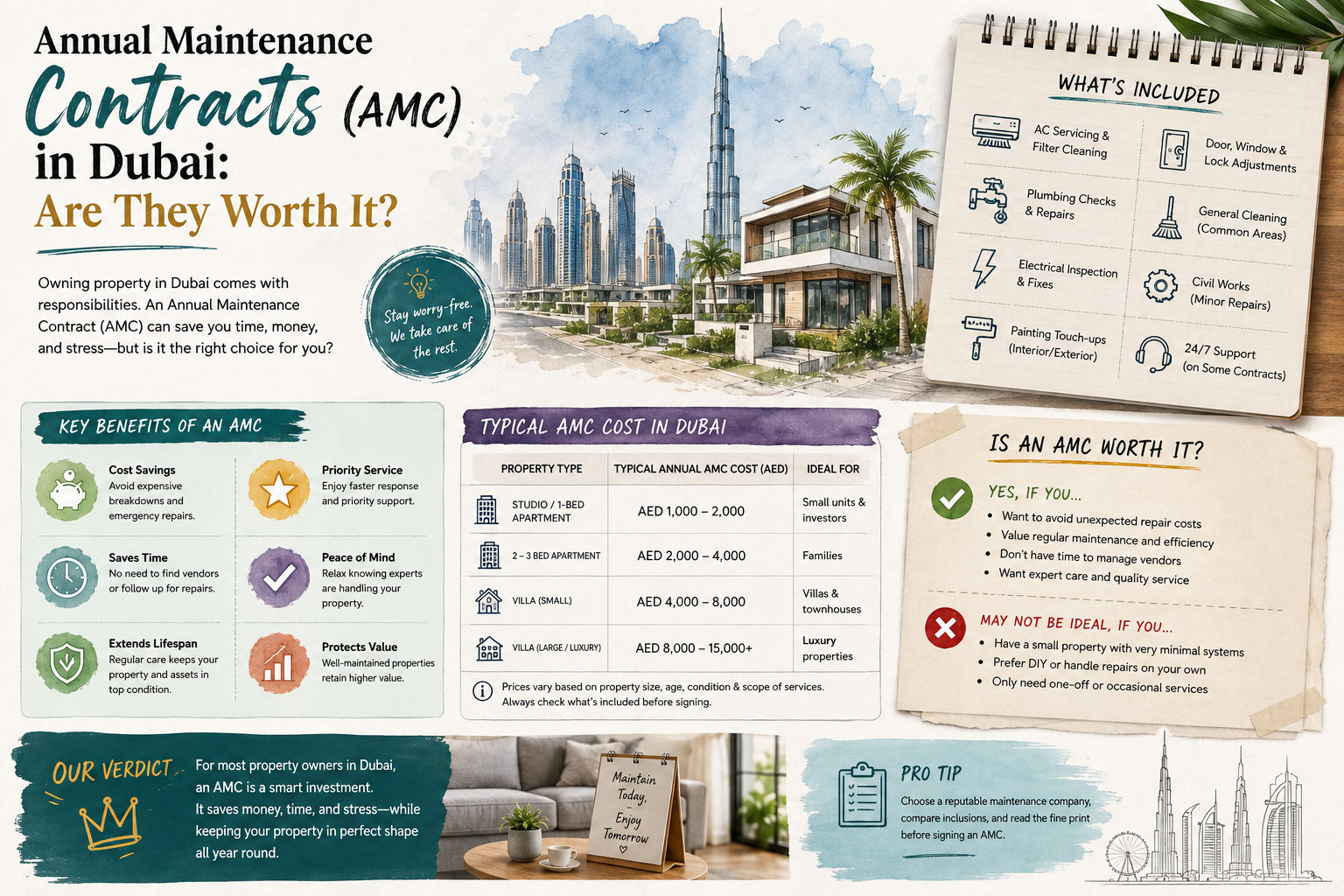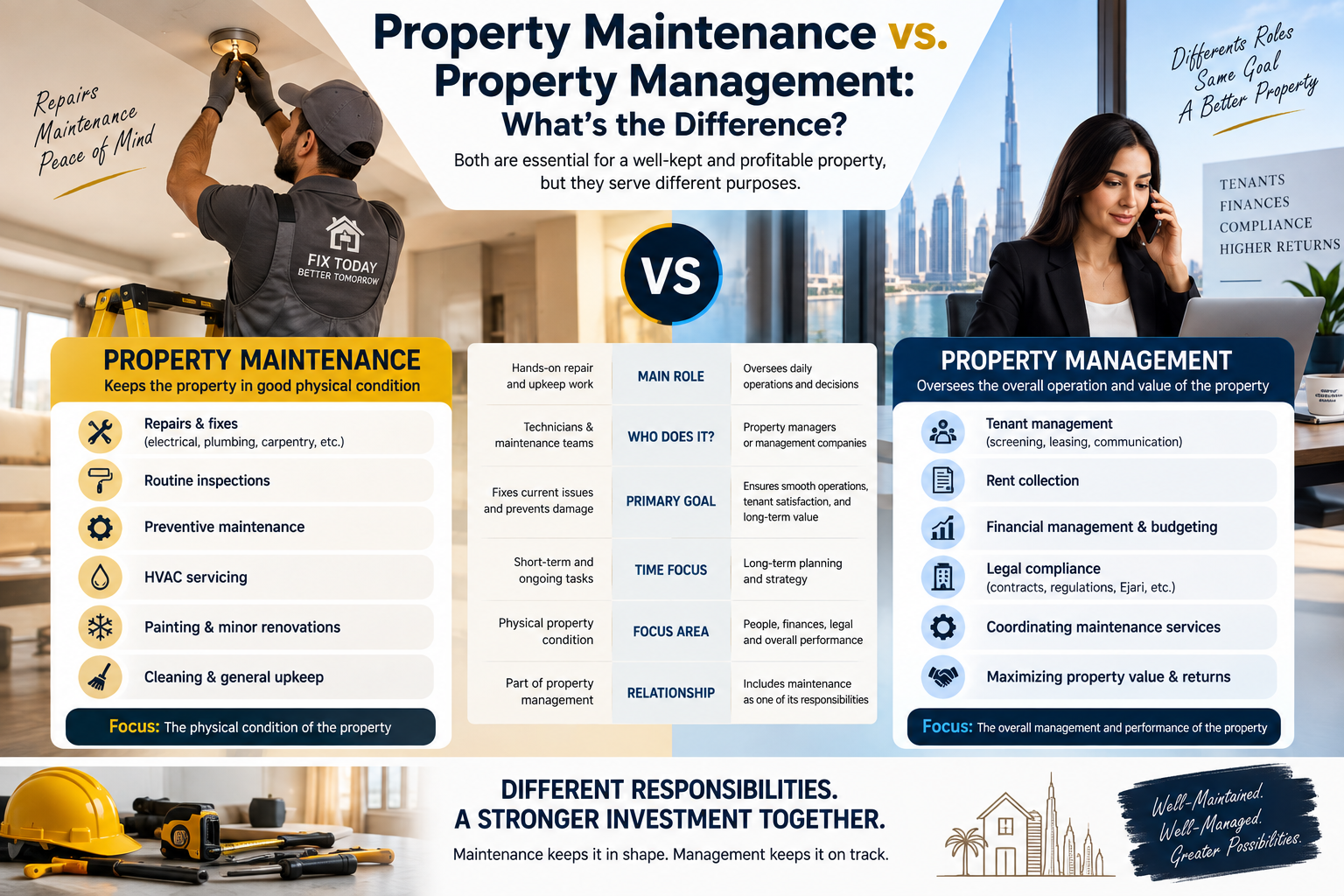
Property management covers the tenants, leases, and finances. Meanwhile, property maintenance covers the building, systems, and upkeep. In the UAE’s fast-moving rental market, knowing this difference is critical.
With the property and community management market in the UAE valued at USD 3.42 billion in 2023 and projected to grow at a CAGR of 12.3% to reach about USD 7.68 billion by 2030, the stakes are high.
In this blog, you’ll understand how these two functions work together to reduce risk, preserve value, and improve performance.
TL;DR
Management includes paperwork and tenant relations. It’s about making sure leases and rent are managed properly.
Maintenance means looking after the property, fixing things when they break, and doing preventive care.
Both matter: one without the other leaves gaps.
In the UAE: strong regulation, high turnover, and intense climate mean extra attention.
What is Property Management?
Property management is all the work needed to keep a rental property or investment running well. It includes tasks related to administration, law, and financial tasks.
Tasks in Property Management
For homeowners or investors in the UAE, this typically includes:
Tenant screening and selection
Drafting and renewing leases
Rent collection and arrears control
Compliance with local regulation (like the Real Estate Regulatory Agency [RERA] in Dubai)
Property accounting and reporting
Handling service charges or community fees where applicable
Why It Matters:
Property management is very important in the UAE because:
Many landlords are expatriates.
Investors often own multiple properties.
Local rules are strict.
Case in point: A Dubai apartment owner uses a management company to handle all tenant relations. The company also manages marketing when the unit is vacant. They send the monthly rent to the owner. This frees the landlord from day-to-day duties. Meanwhile, the owner will receive the periodic reports showing rent that is collected, occupancy rate, and major expenses.
What is Property Maintenance?
Property maintenance refers to the physical care and preservation of the property. It includes the structure, systems, finishes, and overall condition.
It includes:
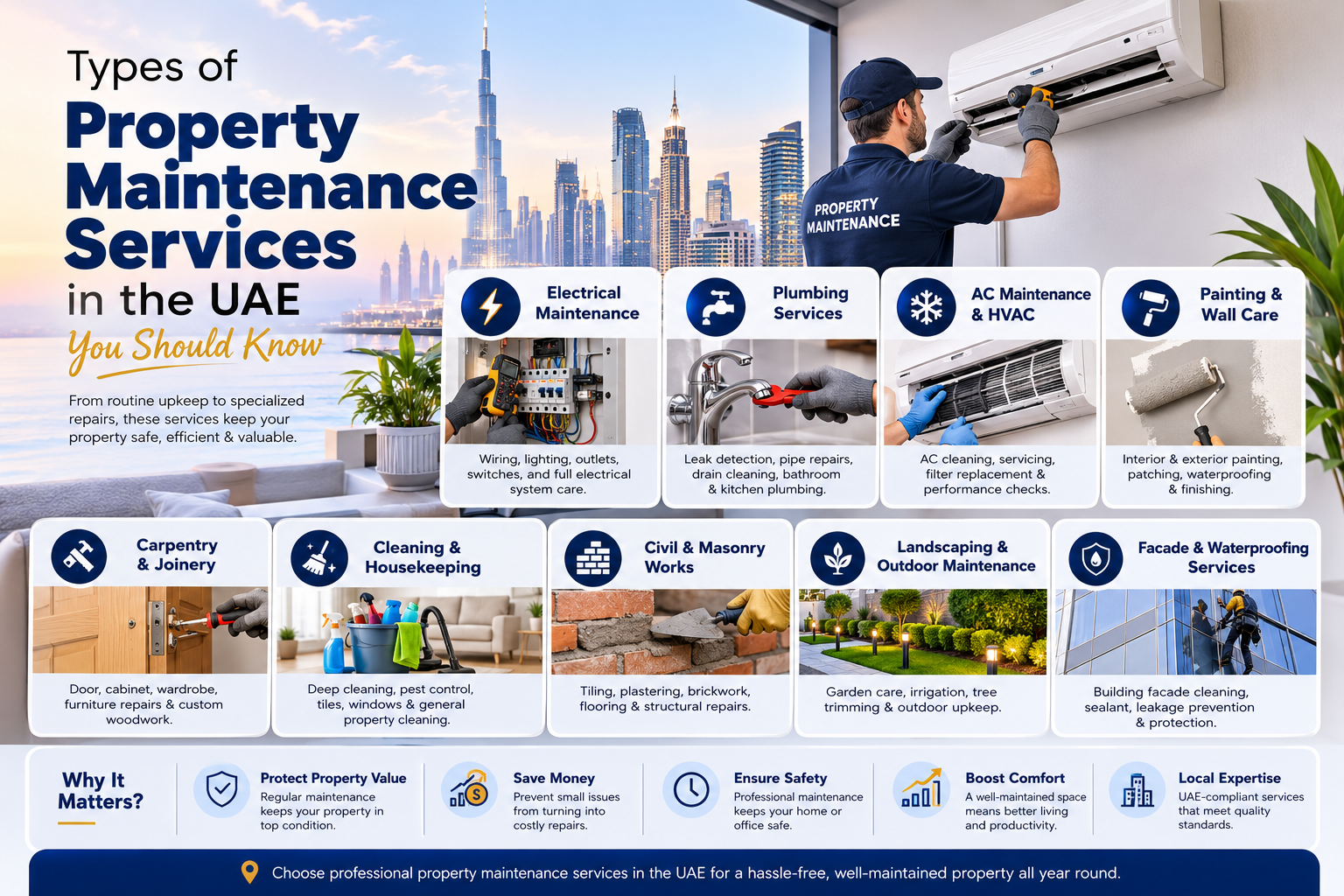
Preventive maintenance: Regular care keeps the property running smoothly. This includes checking plumbing, servicing air-conditioning systems, and cleaning the building exterior.
Corrective maintenance: When something breaks, it needs to be fixed quickly. This can include repairing leaks, replacing worn surfaces, or fixing a broken air conditioner.
Emergency maintenance covers responding to tenant safety issues. It also includes taking care of major system failures and storm damage.
UAE’s heat, sandstorms, and constant use of cooling systems make property upkeep more challenging than in many other places. Well-maintained properties attract quality tenants and reduce long-term costs.
For homeowners alike, good maintenance means comfort, safety, and fewer surprises. For investors, it helps protect the property value and reduce the risk of big repair costs later.
Property Maintenance Vs Property Management: How They Differ and Where They Overlap?
Aspect | Property Management | Property Maintenance | Overlap / Interaction |
Primary Focus | Tenant relations, rents, leases, legal compliance | Physical upkeep of building and systems | Management often triggers, monitors, and funds maintenance |
Typical Activities | Marketing vacancies, screening tenants, rent collection, and lease renewals | HVAC servicing, plumbing repairs, landscaping, and common area upkeep | The manager may approve the vendor, the maintenance team executes, and the manager reports to the owner |
Responsible Party | Property management company or in-house team | Maintenance vendor team or in-house maintenance crew | Integrated reporting keeps both accountable |
In one scenario, A landlord in Dubai instructs the manager to monitor HVAC complaints. The manager dispatches an approved vendor, records the cost, and updates the owner.
If this link breaks, service gaps appear - tenants become dissatisfied, and costs spiral.
Why Both Property Management and Maintenance Matter in the UAE
For owners and investors:
Weak management can risk vacancy, late payments, and regulatory fines.
Weak maintenance leads to rapid asset degradation, major repairs and tenant dissatisfaction.
For tenants and residents, especially expatriates or corporate clients relocating to the UAE, clear and reliable service matters. They judge their living experience on how quickly issues are resolved. They also look at how well the building is maintained and how proactively the landlord or manager communicates.
Pro Tip: Ask your provider if maintenance updates integrate with management dashboards for full transparency.
With many new buildings and communities in Dubai, Abu Dhabi, and Sharjah, competition makes service quality a differentiator.
How Property Management & Maintenance Work Together
Management and maintenance must align through defined workflows, shared reporting, and an integrated system. It protects value and improves tenant satisfaction.
Typical workflow
Tenant reports a repair via portal → management logs issue → maintenance team dispatched → work completed → management updates landlord report.
Maintenance data (costs, vendor performance) feed into management’s financial reports and budgeting tools.
Technology platforms unify both: e-maintenance tickets, tenant portals, and reporting dashboards.
Technology integration
Smart platforms now connect tenants, managers, and maintenance vendors in real time.
The UAE’s property management market is expected to exceed USD 10.1 billion by 2032, because of smart building systems, predictive analytics (UAE Ministry of Economy, 2024).
Example: A company in the UAE uses a mobile app for tenants to report repairs. The app automatically schedules the repair and adds the cost to the owner’s monthly statement. This makes the process quicker and easier for the property manager.
Cost Breakdown: Management Fees vs Maintenance Costs
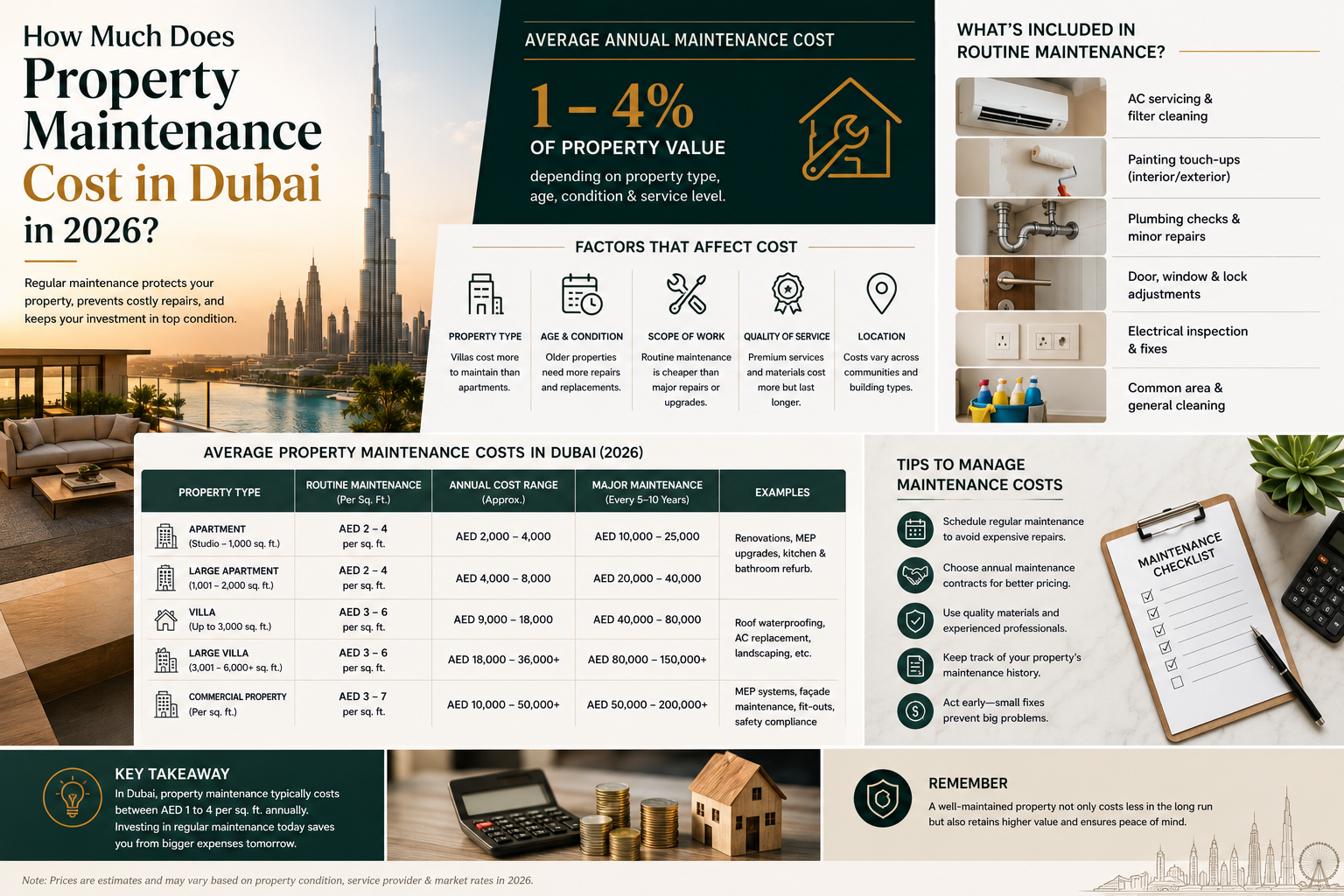
Management fees are usually calculated as a percentage of rent. Meanwhile, maintenance costs vary by property size and age, but can also be forecasted via scheduled upkeep.
Typical UAE figures
Management Fees: 5-8% of annual rent (residential); 7-10% for commercial properties.
Maintenance Costs: AED 4-8 per sq. ft annually. Smart budgeting sets aside 5-10% annual rent for repairs.
Administrative Markups: 10-15% coordination fee when third-party vendors are used.
A well-maintained property could be worth up to 20% more than the same property in poor condition.
Example scenario:
Suppose a property generates AED 120,000 annual rent.
maintenance reserve (5% = AED 6,000
plus a management fee of AED 8,000.
Together, these can prevent AED 40,000 in repair costs and AED 10,000-12,000 in vacancy losses. The net benefit is clear.
Cost-optimisation tips
Compare inclusive vs separate provider models: integrated vs specialist maintenance vendor.
Implement preventive maintenance to reduce large reactive costs later.
Monitor vendor performance and keep transparent records for budgeting.
Use digital tools to flag maintenance trends and avoid surprises.
How to Choose the Right Property Management and Maintenance Provider in the UAE
Selecting a provider who handles both management and maintenance (or ensures both facets are covered) is essential. Here are the selection criteria and the key questions:
Criteria to check:
Full licensing and registration (RERA, Ejari, where applicable)
Clear and transparent fee structure (management vs maintenance fees separated)
Dedicated maintenance vendor network or in-house team
Defined Service Level Agreements (SLAs) for response times, maintenance turnarounds
Digital owner/tenant portal for transparency and tracking
Local market experience (Dubai, Abu Dhabi, freehold vs leasehold)
Key questions to ask a potential provider:
“Do you include scheduled preventive maintenance?”
“What is your typical response time for emergency repairs?”
“How are maintenance costs handled and approved?”
“What reporting do you provide for owner and tenant?”
“How is the service charge or community maintenance fund managed?”
Pro Tip: Always ensure contracts explicitly delineate roles—who approves vendors, who pays invoices, who oversees maintenance budgets.
Common Mistakes to Avoid When Hiring a Property Maintenance or Management Company
Many landlords and tenants fall into traps due to unclear contracts, delayed upkeep or lack of transparency.
Top 5 common mistakes
Assuming the property manager handles all maintenance: The contract might leave out major repairs or only cover repairs after something breaks.
Skipping preventive maintenance: Not doing regular checks can cause bigger problems and higher costs later, such as a broken air conditioner.
No clear contracts or agreements: Without proper vendor agreements, it’s hard to monitor work quality.
Selecting the cheapest vendor: Low prices mean unreliable work and more costly over time.
Ignoring integration of management & maintenance data: Without unified reporting, you risk blind spots in cost, service, or compliance.
Pros & Cons of Combining vs Separating Services
Choosing whether a single provider handles both management and maintenance or if each should be handled separately.
Combined provider (management + maintenance)
Model | Pros | Cons |
Combined (Integrated) | One point of contact; streamlined workflow; faster issue resolution | Possible markup overlap; limited independent checks |
Separate Providers | Specialised skills; flexibility in vendor selection | Requires more coordination; higher admin effort |
Pro Tip: For multi-unit investors in UAE high-rise developments, an integrated model often makes sense, while landlords with standalone villas might prefer separating to optimise costs and vendor control.
Final Thoughts
In the UAE, property success isn’t about ownership, it’s about stewardship. Property management and property maintenance are two halves of the same system: one protects your income, the other your infrastructure. When integrated, they enhance value, reduce risk, and sustain tenant trust.
At LuxoraRealEstate, we believe in clear contracts, transparent reporting, and integrated services that cover both sides effectively. From digital dashboards to preventive care, our systems keep your property running, not reacting.
Because in Dubai, Abu Dhabi, or Sharjah, the difference between a rented unit and a thriving investment isn’t size - it’s how well it’s managed and maintained.